Thursday, 9 July 2009

I have a great idea, It's gonna make millions!

That is what many people proclaim when engaged in conversation with engineers, industrial designers and businessmen.

Sadly though, many of these enthusiastic people get a rather short shrift from those engineers, designers and entrepreneurs, often being labeled "another mad inventor".


In fact, recently, I had been talking to a government department advisor who suggested that engaging such people in conversation was a 'waste of time' and 'these crazy ideas never lead anywhere'.


Why such a stoic and acerbic rebuff from so many industry professionals ? Well I have observed that there is certainly some evidence of envy towards the inventor, but it is mostly the Dr Emmet Brown stereotype that people think of when engaged by such inventive mavericks.


In industry, innovation is being touted as the next big thing, so why does industry have special dispensation from these caustic labels? Well perhaps there exists some snobbery, but the main reason I can discern is that many inventors suffer from living up to the stereotype a little to closely. Let me explain, most inventors exhibit the following traits: -


  • Incredible enthusiasm for their idea

  • Zealous belief their idea is the next big thing

  • Often over value their ideas nett worth

  • Limited understanding of manufacturing

  • Limited understanding of development costs

Juxtaposed to this stereotype are the industry professional who are supposed to their antithesis having a good and realistic understanding of these things, however the truth is that industry is a little closer to Dr Brown than they would care to admit. So what really separates these groups?

Industry is often cautious about their ideas, they have experienced the epic cost of development and disappointment of market failure. They have better grasp of the profit margins achievable and thus more accurately guess the nett worth rather than taking a wild stab in the dark as many 'mad inventors' seem to do, but one thing is certain, industry often don't know all the answers, but they do know where to turn to for expert advice and are respected by those consultants and it is these that are the key differentiators between 'the mad inventor' and the 'industry professional'.

So the key ingredient for you crazy inventor types out there is often partnering up with people in the know such as engineers, intellectual property lawyers, marketing consultants. But how can I get these people to take me seriously you may ask? Who can I turn to?

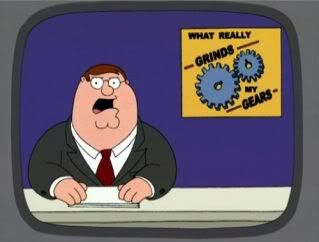
Well I'll save that for another blog entry as dinner is waiting to be eaten (mmmm... pork sausage sandwiches), besides which I feel a rant coming on... something that 'really grinds my gears'.


Monday, 6 July 2009

Renault like the Wind

Well as promised I bring you bloggings from the world Series by Renault.

Of interest to some may be the Renault Design stand located in the paddock. This featured a finnished 1/4 scale model of the Renault Megane coupe concepts allong with a foam and clay models.


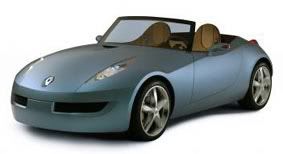
Also on show was a full scale show car the Renault Wind, a two seat convertable.
A bit disapointing really considering the scale of the World Series to have only one concept car and one scale model and a few renderings. At a time when design is the second fastest growing industry and innovation being touted as the saviour of all things reccesion, I think Renault have missed an oportunity here.
With the automotive industry in a slump its hardly inspiring to witness such a feeble effort.
Renault: can do better, should do better, must do better. B minus, F for effort.
If you can be botherd, you can read more about the Renault Wind at Gizmag

Thursday, 2 July 2009

World Series by Renault


My son an I are off to Silverstone this weekend to watch the World Series by Renault.


My love of motorsport has always played a part in my life as a designer. The technology, materials, quality of workmanship, optimisation of every parameter and not forgetting the Human Machine Interface has always fascinated me.


We are taking my sons digital camera and will take a few snaps of the event.


When I return perhaps I'll post about what product I find and maybe analyse a few to see what we can learn from this hi-speed hi-tech world. Hopefully I'll be able to find out what the motorsport industry is doing to lower its carbon footprint too


Tuesday, 30 June 2009

Designer diet

No, I'm not talking about some hip trendy new weight loss plan to give you that "cut look". What I am talking about is what an industrial designer likes to eat whilst working.


Although I work from a home office these days, there have been times when I used to go to the office and work with other industrial designers, so my observations are not based simply on my own lifestyle, but others also.


A couple of years ago my weight had crept up to just over 80kg, not a huge amount you might think, but at five feet, five and a half inches tall that's clearly a tad overweight (don't forget the half inch, that half inch is very important to a shorty like me).


The reason for the piling on the pounds is the deliciously evil flavors of crisps, cakes and chocolate bars.


You see, sat in my chair all day the only exercise I used to get was getting out the chair to go get more chocolate... and maybe swiveling my chair to the sound of a loud wheeeeeeeee.


What I couldn't quite figure out was why I had such an urge for sugary sweets as I don't really have a sweet tooth and I just put it down to middle age spread and the fact I didn't go walking and rock climbing as much as I used to in my twenties and all the sitting down, thus not burring off the energy.


Then I discovered, well told by a friend in the medical profession that my habit was normal for my line of work and similar.


Truck drivers, computer programmers, analysts et.al use up lots of glucose or blood sugar, and this sugar needs replacing. A pea sized gland right in the centre of your head called the pituitary gland send out messages to get yourself tanked up with lots of lovely stickies.


However, there is a word of warning to be heeded here more than just a reminder that such indulgences will expand you waist line, your brain whilst it needs the glucose can suffer irreparable damage by over consumption... there is truth in the old saying 'everything on moderation'


As usual the recommendation is eat a balanced diet and get plenty of exercise. With EU law stipulating that we should take a ten minuet break after twenty minuets of work in front of the computer screen why not use this time to walk to the shop for some fruit instead of those Mars bars or Snickers you usually crave

Friday, 19 June 2009

Greenpower

I met today with Alex Childs, a maths teacher at Penair High School to discuss how Buff Design coud be of help to their Greenpower car project.


For those of you who are not aware of what Greenpower is, let me fill you in on a few details. Run by by the Institue of Mechanical Engineers and; Greenpower is electric car racing for schools, colleges, apprentices and youth groups, the aim being to promote engineering and technology as exciting careers, to those aged 9-25.


Being keen on enviromental concerns as much as I am on motorsport, Greenpower allows me a little indulgence in my passion for cars and racing whilst maintaining a modestly clear concience.


My involvement with the project will be in the form of helping to raise sponsorship, and perhaps helping get a few of the more technically challenging part made on a shoestring.


One of the needs of the school is to generate 2D drawings for part fabrication, and some 3D modeling to help get an visual on the bodywork and its potential aerodynamic performance.


Hopefully This has already been sorted out as I spoke with a value added reseller who is willing to supply the software for free. all that needs to hapen is for the school to approve the introduction which hopefull can happen in early July

Wednesday, 17 June 2009

"You know what really grinds my gears?"

I'll tell you what really grinds my gears, bad consumer product design, that's what!

At risk of being sued by Peter Griffin for nicking his tag line, I thought I would share some of my grievances I have with some of the many consumer products I have owned, used or looked at and walked away from in disgust.

Now fast approaching the big four ohhh as I am, when I can become an official G.O.M. (Grumpy Old Man) I finally get to air my views and pent up rage all of these years for bad design.

Case in point, today I was feeding our five month old baby with his Phillips Avent baby feeding bottle. Now the little chap is a tad independent and grasps for the bottle, he appears even at this early stage to be ambidextrous (it kinda runs in the family) and he reaches out enthusiastically for the bottle (quite a good design might I say). To to aid our little fellow in gaining a good grip we decided to purchase a little add on extra, a pair of handles that fit rather neatly under the cap, clamping the said device to the bottle so baby can have a little go at feeding himself.

Well no actually, you see, who ever it was that designed the handle didn't really care about baby ergonomics did they.. no, perhaps they were thinking that babies didn't really need them and designed them to be used by a 95th percentile adult, or maybe they were smoking pot and just didn't give a toot, whatever the reason I don't know.


You see the baby bottle has to be tilted to allow the milk to flow down towards the teat, easy if your a grown up, but these little nippers just can't raise the elbow and articulate their tiny little wrists to hold the bottle at a suitable orientation as the handles are parallel to the axis of the cylindrical body.

Now a simple remedy would have been to actually study how a baby might hold the bottle and such an exercise would immediately have alerted the industrial designer to affect a pair of handles substantially perpendicular to this bottle axis. in fact looking at the design the handles could have been better shaped, would have taken a nice soft TPE over moulding for baby to grip and would have required a tool no more complex.
And that's just for starters, I could go on and on and on, and if you know me at all, you'll know I probably will.

Tuesday, 16 June 2009

Praying for a Mantis

If like me you've got four kids then you'll know how difficult it can be to keep track of where the TV remote has gone. Is it down the back of the sofa? Under the sofa? In the toy box? Maybe the baby has finally managed to eat the entire thing, rather than just gnawing at the edge and dribbling on it. Who knows?


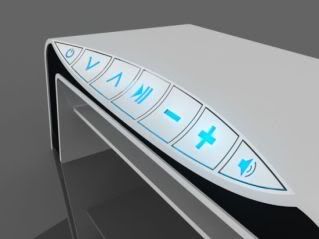
Well up and coming talented industrial designer Siona Ward perhaps has the answer. Her initial Apple Mac like concept is now taking shape in the form of "Mantis" a foot operated remote control.


The design has evolved in to an advanced concept
that has realistic prospects of being manufactured and marketed is the guise shown with a bent acrylic coffee table and the remote control unit clipped over the top. Of course the unit could be engineered to be something of a universal fit to a variety off coffee table styles, thus opening up the opportunities to sell to a wider target audience.

Furthermore, with a good user interface I can see this project having advance menu driven actions that could control not only the TV, but also a plethora of consumer electronics that fill the average home.

Siona has entered her Mantis remote control coffee table for the James Dyson Award and I'm sure she would appreciate it if you readers (are there any?) would take a look and perhaps consider voting for her.

I hope this hits the shops; because if it does I'm heading straight down to the electricals store to get me one, then I don't have to hide the remote from the kids anymore, because when I do I can never remember where I put the flipping think, so I'm praying for a Mantis.

Friday, 12 June 2009

The Passing of a legend


Don't panic, this isn't an obituary for Phillipe Starke, Dick Powell or Richard Seymour. No, but the family is sad non the less, because on Monday Freddie the Hamster passed away.


So why mention that on a blog about design? Well I said Freddie was a legend (named after famed comedian Freddie Starr) and this is because not only was he a little crazy in his antics (no he didn't bite the head off a human... it was just a joke that the press got hold of, he was going to sue you know) but Freddie was a legendary design guru. Oh yes, Freddie knew a cool design when he saw it, he might not have had any RayBan's (do you know how difficult it is to get RayBan's hamster size?) but he did have a Habitrail Ovo Suite... very swish.


Now in my humble opinion (me humble? opinionated yes, but humble?) the Ovo is a fantastic combination of form and function. it is clear that the designers, engineers, marketing and research guys have put a lot of hard work into the Ovo. The clever way that the tubes use a single moulding that is mirror image across a plane normal to the split line means only one moulding is needed to make the two part assembly. The ease of assembly so the kids can take it apart to clean out the hamsters old bedding (do you seriously know any kid that looks after the family pet?) and the array of add on accessories such as a training wheel, a mini maze and a sleeping pod et.al.


However I do have to temper my enthusiasm with the knowledge of having lived with the Habitrail Ovo, the material has proven a little fragile, more especially on the large 'helmet visor' like cover of which two were broken. OK it was misuse, well, that is if you consider miss use being an 8 year old dropping it on to a linoleum floor from waist height, or Mrs Buff bumping into it with the Dyson? Personally I don't think that could be considered misuse. We industrial designers should design not only for manufacture but also for living with, and that means understanding how people use things. In the past perhaps these things didn't matter in what has been a 'throw away society', but these days of personal and corporate social responsibility to each other and the environment, do we really want to be designing product so fragile as they need replacing before even the warranty runs out?


Another gripe we had with the Habitrail Ovo has been all the little nooks and crannies that trap dirt and can't easily be cleaned out, especially the patented connecting rings which overtime jam up and become stiff to turn the locking mechanism, but also wear rapidly and fail to grip the tubes the result being the penthouse suddenly becomes a bungalow and the whole thing swings down under its own weight.


That said, the Habitrail Ovo is still a cool if a tad expensive design with only few minor flaws. Still, I think industrial designers can do better, should do better, must do better


The genius that is Kenny Rodgers

Yes, that Kenny Rodgers, the famed country and western singer. "Why genius?" You say. Well because he gives good business advice in his 1978 hit "The Gambler"*. The chorus line beginning with "You got to know when to fold 'em, know when to hold 'em, know when to walk away, know when to run"

The reason I mention this now is because in the last couple of days I have "walked away" from business, rather than get embroiled in something we are not equipped to do to the standard that our clients should expect of us, or in the second case we don't want to design a tool which we believe won't work for the client and would affect both our reputation and client's reputation too.

In the first case, we were presented with a product design project that has a large graphic design and print element. This not being our core competence, and not wishing to simply subcontract the work out thus raising the clients costs, we decided to forward to work on to a competitor. Now some may think that's just crazy but think about it for a moment.

If I had taken on the work, it's doubtful first of all that after all the time spent doing cost analysis and quoting, the price would more than likely have been uncompetitive if the project where to be outsourced, wasting my time, the subcontractors time and worst of all, the client time.

If I had elected to do the work in-house in order to price competitively, the likely outcome of winning the order would be out of control costs as the project would no doubt take longer due to the lack of in house experience and probably run over budget and past schedule... not good for one's reputation!

In the second case this week of knowing "when to walk away" we turned down a long standing enquiry to design a tool for a medical device manufacturer. At Buff Design, we don't just simply design products, but we design entire product lifecycles, including manufacturing processes and equipment.

The story goes back to last August, when we were approached to help solve a manufacturing issue with a medical device production. The company was having to scrap more than 60% of its production to non-conformance issues. We flew over to the client's site to take a look first hand at the production process and quickly concluded that the work holding that had been specified was simply not working as it should. We proposed a new fixture design that we could guarantee to solve the problem and reduce scrap to at maximum of 0.3% but costing €40,000.

We demonstrated the business case and showed the client that a return on investment would be seen in less than 3 months by reducing scrap and speeding up the operation a little too.

Since submitting the proposals and quotation the client has asked if we would reduce the cost of the tool by simplifying the design. Knowing that the proposed design is one of only two pragmatic solutions and the one chosen would require less maintenance thus the total cost of ownership over the life of the tool is less, we declined the work because once again we believe that our reputation, our commercial partners and the client's reputation would be damaged as a result.

My thinking is, that such decisions whilst difficult to make are necessary for the long term good of all concerned, believing as I do that what goes around comes around. Sometimes it's hard to keep the faith, and the payback seems to elude you, but in the end it comes back to you as in the case with the tool design, the client has now decided to take our advice and go along with our proposals almost one year after first submitting them.

So as a reminder, listen to Kenny when he says "You got to know when to hold 'em, know when to fold 'em, know when to walk away, know when to run'

*Written by Don Schlitz

Wednesday, 10 June 2009

Inspiration

As an ID professional with a leaning towards the more technical aspects of industrial design, from time to time I feel a need to refresh my creative thinking, get new ideas, open myself up to new forms. Over the years my designs have moved from rather a geometric, almost cubist style towards more organic and free flowing forms.

Whilst I recognise that I am very much a "form follows function" thinker, in order to bring more creativity into my consultancy practice, I employ various people where a client needs a more free thinking or conceptual approach.

For personal inspiration I often find I turn not to a fellow industrial designer but to artists and in particular sculptors who also work in a 3D world but at arguably a higher level of right brain thinking.

One such sculptor I often look to is my good friend Andrew Thomas whose work can be found at http://www.3dsculptor.com/ . Andy's work sometimes puzzles me, sometimes surprises me and occasionally I have a little aversion when I see a juxtaposed design such as "Reason", that I often find turns gently and slowly to admiration.
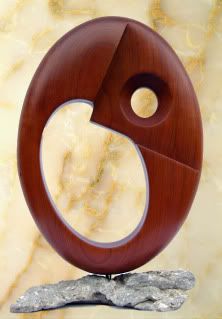
In fact I solicited Andy's advice whilst working on the Keebunga project for James Williams. Although the form of the Keebunga project was dictated by its function, some of its detailing owes a little of its aesthetics to the inspiration of Andrews "Unity" and "Hidden Depths".

So my advice to aspiring students, amateurs and seasoned professionals alike is, get down to your local museum, go to the library and borrow some books, immerse yourself in a creative world beyond supermarket shelves stacked with steam irons, jug kettles and coffee makers. If you do I guarantee it'll change the way you look at design, the way you create, you'll become better and I wager happier too.

Tuesday, 9 June 2009

This is how caravans should look

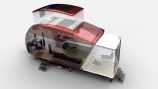
Over on Product Design forums, Rob Villa has produced a stunning concept of a brighter caravaning future, he says


"My design is inspired by airstreams and 50s style, highlighted by the whitewall
tyres and wheel covers, and the sleek airstream form and aluminium band and dark
windows"

The interior is modern and sophisticated with a bedroom located above the main living area created by an electrically operated pop up roof, access to this bedroom space is provided via the moveable ladder at the end of the kitchen area.


There is a comfortable sized bathroom and a clean kitchen with fold out breakfast bar area. In the main living area there is a sofa which also doubles as a bed with a second slide out mattress and stackable chairs provide more seating options. Additional space is provided via the fold down rear panel which gives a decking area which can be used as both an inside and outside space.


Having worked in the caravan industry myself I would conclude that the time is ripe for manufactureres to develop their model ranges using Rob's design as inspiration. For sure production models are bound to look somewhat different after concessions are made to manufacturing and market research but who wouldn't want to holiday in something so fantastic looking? I know I would!

Monday, 8 June 2009

Pro/E Wildfire 5.0 and direct editing

Pro/Engineer 5.0 highlights + Direct Edit sneak peak from DEVELOP3D on Vimeo.

News just out from PTC, authors of the much lauded Pro Engineer Wildfire CAD program of the pending release of version 5.0 due out sometime in Q4.

Not big news perhaps, but PTC bought Co Create one of the leading, direct modelling or explicit modelling as its sometimes known CAD developers. PTC have been working hard it seems to meld the freedom and ease of use of Co-create and the power of parametric modelling.

The average CAD jockey has been awaiting this technology convergence for more than a decade and we first saw it in a truly usable format with SolidEdge V20 from Siemens PLM with their acclaimed Synchronous Technology or ST for short. It was obvious I suppose that PTC where going to follow this trend as has Autodesk with their pending Inventor Fusion product line up and the same with Catia V6 from Dassault Systems.

Interestingly PTC look like they have gone a step further in integration of the two technologies, whereby both systems work with one interface, without the need to switch from one method to the other with the loss of parametric data, though it's perhaps too early to really tell if this is the case until one can get a hold on a trial version when it's available on general release.

Another interesting move by PTC is the dropping the Lightworks engine in favour of Mental Images rendering engine. Certainly it could be argued that PTC needed to catch up with Solidworks in this area, as do Seimens but Lightworks have also upped their game in recent times too, no doubt brought about by increasing competition from the likes of Bunkspeed Hypershot and Photoworks.

I have to say I’ve always been impressed with Pro Engineer for its scalability and engineering prowess with a whole host of add-on’s that can take you all the way from designing a simple two part clamshell all the way up to a complete Ferrari Formula one car. Indeed whilst looking at purchasing SolidEdge, I also considered Solidworks and Pro Engineer and have to say it was a close run thing between PTC and Siemens offerings. Have I made a mistake? Well I believe that Siemens will rise to the challenges from their competitors and deliver products to match. Time will tell.

ZInk - New Zero ink printing technology

I learned of an exciting new technology today called ZInk or Zero Ink printing.

The ZInk paper has all the colour chemistry embedded within the paper itself, using clear micro crystals that change colour when subjected to heat. The paper is also coated with a clear polymer, giving it improved water resistance over current technology.


The real trick with ZInk though isn't just the fact you no longer need to buy expensive ink cartridges or ribbons but the miniaturisation that can be achieved by the absence of bulky print heads and cartridges. My guess is it will be less than a year before we see the first mobile camera phone with a built in printer.


Products are already using this technology from Dell, Tommy and Polaroid, who must be relieved that the once dead market for their print on demand cameras could now make a revival in the digital age.


From an industrial design point of view this holds many exciting connotations. First we have the possibility to print on demand business cards, which could be tailored to your prospect. Imagine you are speaking with a buyer of products aimed at the mother and baby market, you could print a business card with a picture of something similar you worked on, whilst the next day you could print a card with a picture of a washing machine project for a white goods buyer. But more than that, for industrial designers we could be looking at a busy period ahead as designing peripherals and embedding the technology comes into greater demand providing work opportunities, whilst portrait photographers could print directly from their camera to get a proof or to hand out a sample at a wedding, the possibilities are truly exciting.


Innovation has often been touted as the key to pulling the global economy out of recession, and looking at the ZInk technology, I feel optimistic that a turnaround is just around the corner.

Sunday, 7 June 2009

Buff Design launch new website

We have just launched our new website. We feel it's much easier to read, more imformative and easier to navigate.
Please feel free to leave your comments, correct our spelling or just say hello

Designbox. Envirowise Live chat


I joined the live chat session today on the Designbox supported by UK government department Envirowise.

The purpose of Designbox is to offer support to the design community and a chance to chat to industry experts as well as each other regarding the design of sustainable products and packaging.

One subject which I personally believe strongly about and to which my peers also seem keen to promote is "non design". That is to promote the philosophy of reducing material usage and part count to lower the impact on total energy consumption.

Another hot topic was “longevity”. We designer believing we should return to values of yesteryear and design products to last and be maintainable. Of course the argument against this is that companies who don’t choose to design in obsolescence will go bust.

However there is plenty of clear evidence to suggest otherwise. What is required though is a shift in consumer attitude, but perhaps more importantly to our business thinking and to begin considering the whole lifecycle of a product right from the earliest concept proposals and using product lifecycle management as a business and marketing strategy.

Remap


I attended today my first Remap meeting, held at Tremorvha Industries, Three Milestones near Truro in Cornwall.

I'm certainly excited to be getting involved with Remap and I'm looking forward to using some of the knowledge and skills I have learned over the last twenty odd years to help improve the quality of another person’s life, even if only in some small way.

All the volunteers I met where enthusiastic and very welcoming, I’m really looking forward to working with them in the future.

If you think you can contribute in some way I’m sure if you click the
Remap link your help will be very much appreciated as funding is very tight for this excellent organisation.

Monday, 2 February 2009

Eco Friendly Business

After some extensive searching I finally sourced some business cards for Buff Design that are in keeping with the eco friendly policies that Buff likes to maintain.

They look very swanky, with a colour scheme that compliments the website, each with an individual design.

They are made from 100% Recycled Fibre ,Totally recyclable, biodegradeable and Chlorine Free.

Can't wait to see them when they have been printed.

Thursday, 29 January 2009

Buff Design make local news

Buff Design made the local news today, being featured in The West Brittton business section.

Tuesday, 27 January 2009

Was SolidEdge the right choice?

You when you ponder about a big decision?. You take your time weighing up all the options, the pro and the cons. You're fnallyabout to take the plunge...... COLD FEET

Well, it's always nice to hear form other who have similar experiances, someone who can give a more rounded view on things, an unbiased opinion (is there ever such a thing?)

Well I recive this reply to a psot on a well known Product Design Forums

"It is great that you decided to test different tools before you buy. I used to work for a UGS reseller and I can say that direct comparison was what our competitors feared mostly. Their sales and marketing were better than ours but we won 80% percent of the deals in which technical considerations, integration, scalability (especially), etc. were considered thoroughly. Teamcenter blows away their "PDM", a bit silly to say PDM. So, congratulations on the good choice and wish your business success.

If you have any personal experiances that you'd like to share, please feel free to add your comments

Wednesday, 21 January 2009

SolidEdge 2D to improve supply chain management

One of the problems I've face over the last few years has been working with external partners.

For example, we deal with a toolmaking company who uses AutoCAD LT 2004 for its manufacturing drawings. Having previously been a user of Autodesk Inventor, has meant that we have had to save in .dwg or .dxf format, as our partner cannot read .idw files, the native Inventor 2D output.

Not a major stretch you might say, but when working on a project that may have 30 or 40 or more drawings, it becomes a real pain to save in .idw and then .dxf and often .pdf for third party users too.

So when it comes to issuing an ECO and releasing revisions, drawing management can become a real headache.

We identified this problem early on, and so far have been able to manage the data manually, but now as we are growing in size, this can no longer be allowed to continue.

Of course we will be using Teamcenter Express for document management, but another great bonus for us is, we no longer need save drawings in different formats.

Instead we will post a link to the Solid Edge 2D FREE download. This means our partners can read, mark up,annotate and modify drawings where necessary in their native format, whilst Teamcentre can be accessed by external collaborators via the web to maintain robust and reliable document management.

We can of course allow external partners to view 3D information too with the free SolidEdge 3D viewer.

There are further benefits to be had with SolidEdge 2D. AutoCAD LT 2009 is listed by Scan for £1,196.46, for a single licence and no support, and a 5 licence pack costs £5,254.05.

Compare that with Solid Edge Design & Drafting at £1,760, with maintenance costing £390 per licence per year, you can easily see that the migration to 3D is more easily justified.

Solid Edge Design & Drafting is the perfect choice for a jig and fixture designer or other business that needs basic 3D solid modeling capability and with a clear upgrade path, it's hard to see a reason for choosing something like Spaceclaim or Alibre in my humble opinion.

Click to download a SolidEdge free 2D factsheet